Leaf-mining flies on early flowering plants
A few years ago I was digging through Lester Ward's old fossil collections at the Smithsonian, looking for leaves of flowering plants hiding under the wrong label. Many small early angiosperm leaves got filed as ferns back in the 1800s, so I've gotten pretty good at spotting them. Some of the features I look for are irregular-reticulate venation, glandular teeth along the leaf margin, and the shape of lobes and sinuses along the margin. This is the search image I developed while working on Potomacapnos apeleutheron (Jud and Hickey, 2013) and Fairlingtonia thyrsopteroides (Jud 2015).
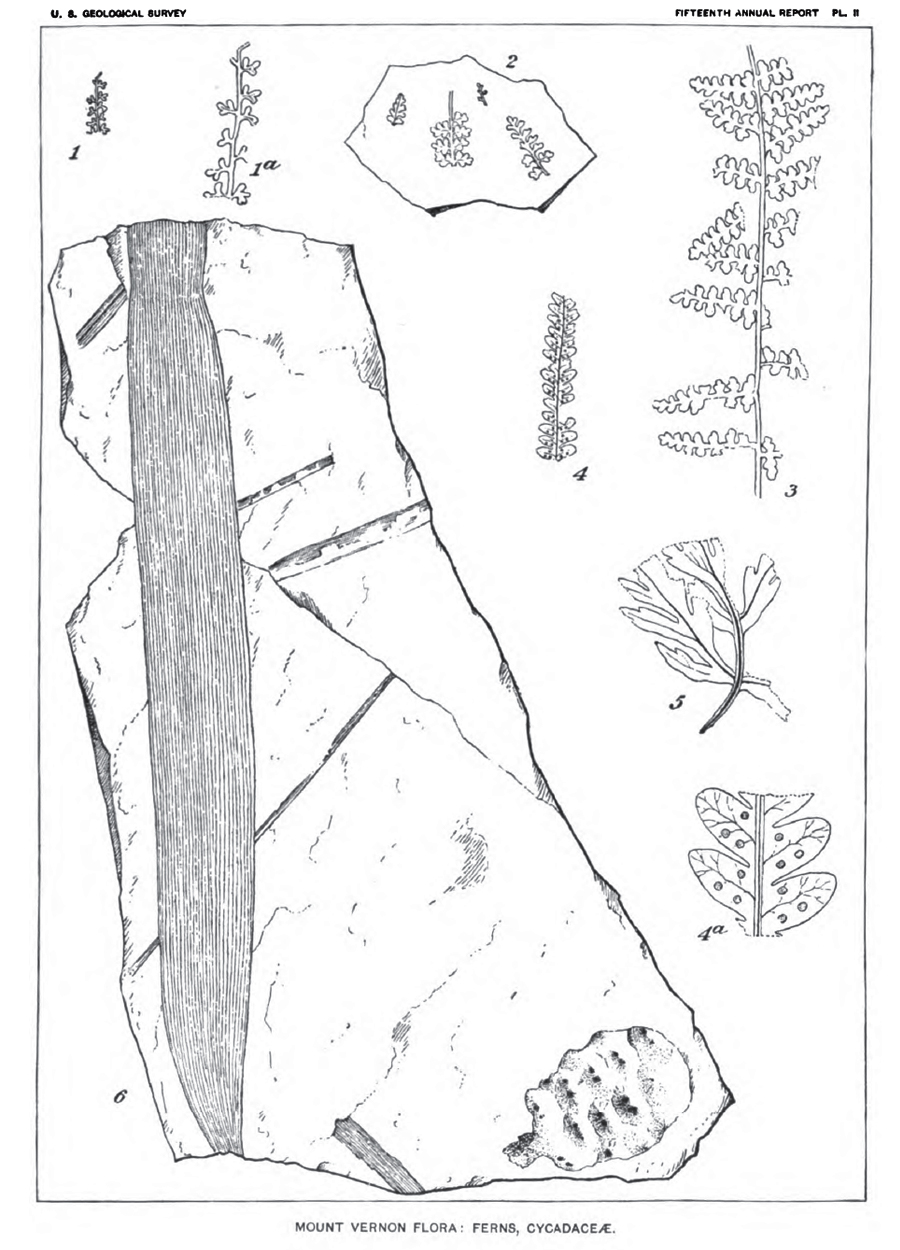
At one point, I came across a small angiosperm leaf from the Albian of Virginia with a little trail just inside the margin of one of its lobes. I think Ward was an excellent paleobotanist for his time, but this specimen has a leaf mine that he apparently didn't notice, or at least didn't illustrate (Ward 1895, Plate II, Figure 5).
Leaf-miners are insects that live inside leaves during their larval stage. They feed on the inner leaf tissue (the mesophyll) and leave a conspicuous trail as they grow. Several groups of insects have independently evolved leaf-mining, including Lepidoptera (butterflies and moths), Diptera (flies), Hymenoptera (sawflies), and Coleoptera (beetles), and each group's mines have a distinctive shape. When fossil leaves are well preserved, their mines are preserved too, which gives us a way to study plant-insect interactions in the fossil record.

I showed the leaf to my colleague Dr. Jay Sohn, also a graduate student at the University of Maryland at the time. He set out to identify the miner while I set about describing and identifying the leaf.
The results of our analysis were published in Cretaceous Research in 2016. The leaf adds to the growing number of herbaceous eudicots known from the Lower Cretaceous Potomac Group deposits, and it highlights the value of museum collections as sources of new discoveries.
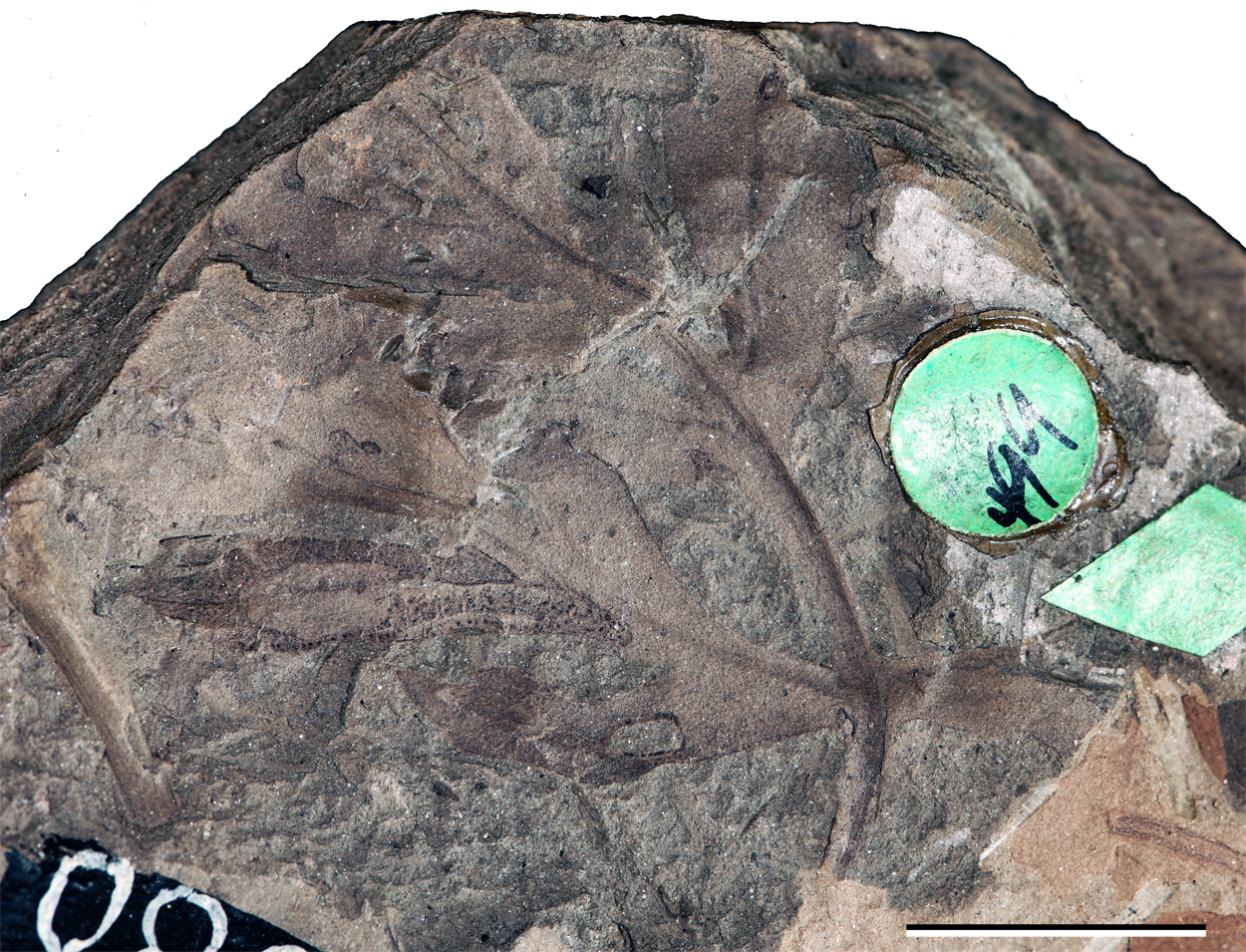
The mine has features characteristic of agromyzid flies, a family of leaf-miners most closely associated today with asterids, a group of flowering plants that didn't exist yet in the Early Cretaceous. Some leaf-mining flies today feed on Ranunculales (buttercups and relatives), which probably were present in the Early Cretaceous, but those relationships are probably the result of recent host-switching from asterids to Ranunculales (Winkler et al. 2009). If the fossil is an agromyzid fly mine, it suggests these flies may have started out on early eudicots, later expanded to other plant groups where they diversified, and that their pre-asterid history has been lost to extinction.