Two new species of aquatic ferns
Salviniales are an unusual group of ferns. Most ferns grow on land or on other plants, but these live in fresh water. Most ferns also produce only one kind of spore, but Salviniales produce two: small microspores and large megaspores. Although they're found throughout tropical and temperate regions, the group includes only about 100 species in five genera. One of these is the exceptional genus Azolla.
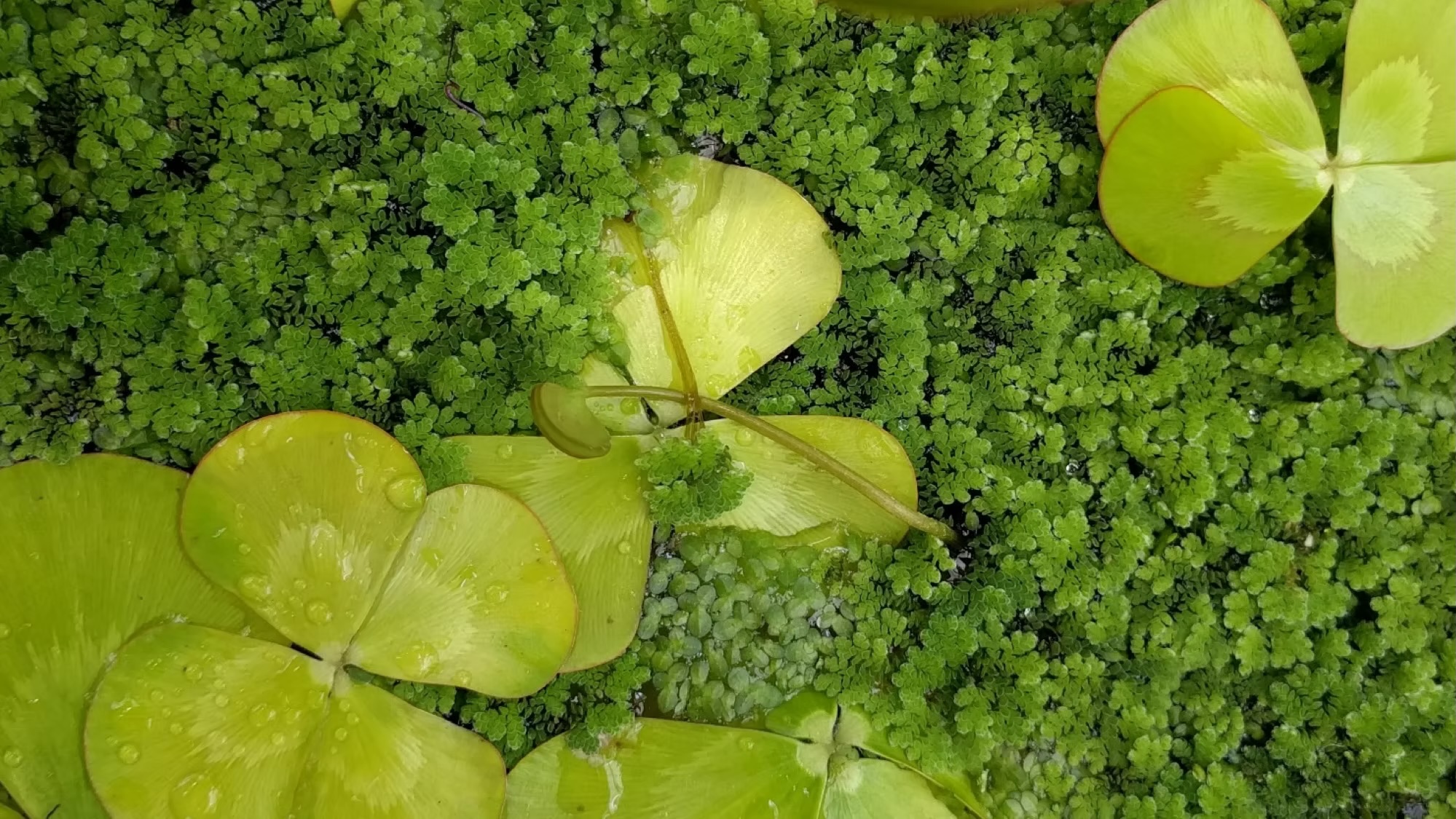
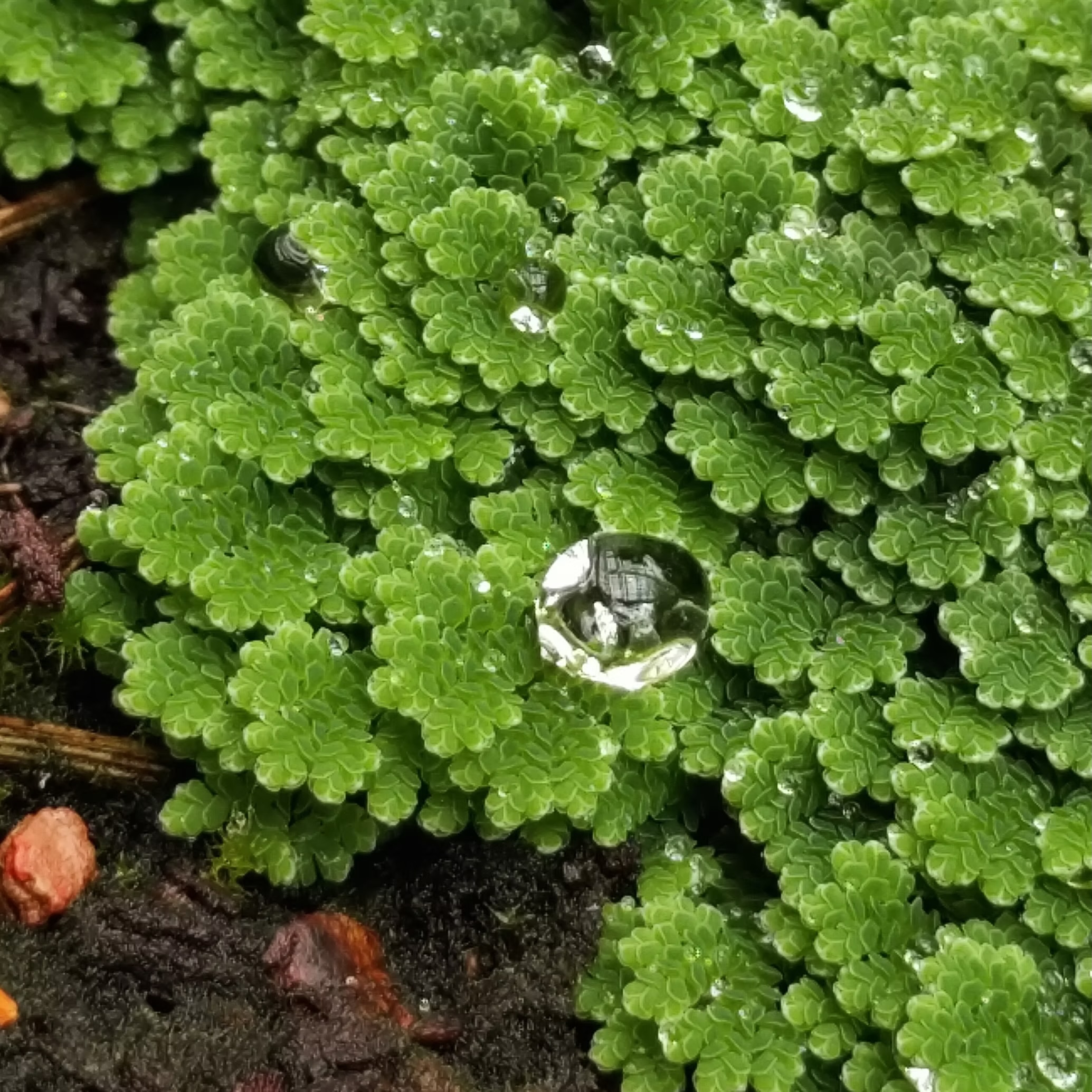
Azolla plants are tiny, free-floating, and highly reduced, with two-lobed leaves only about 1 mm long. There are only about five living species, and they're best known for their partnership with a nitrogen-fixing cyanobacterium. The cyanobacterium lives in a sheltered spot at the growing tip of the shoot and in a small cavity inside each leaf, where it converts nitrogen from the air into a form the plant can use.
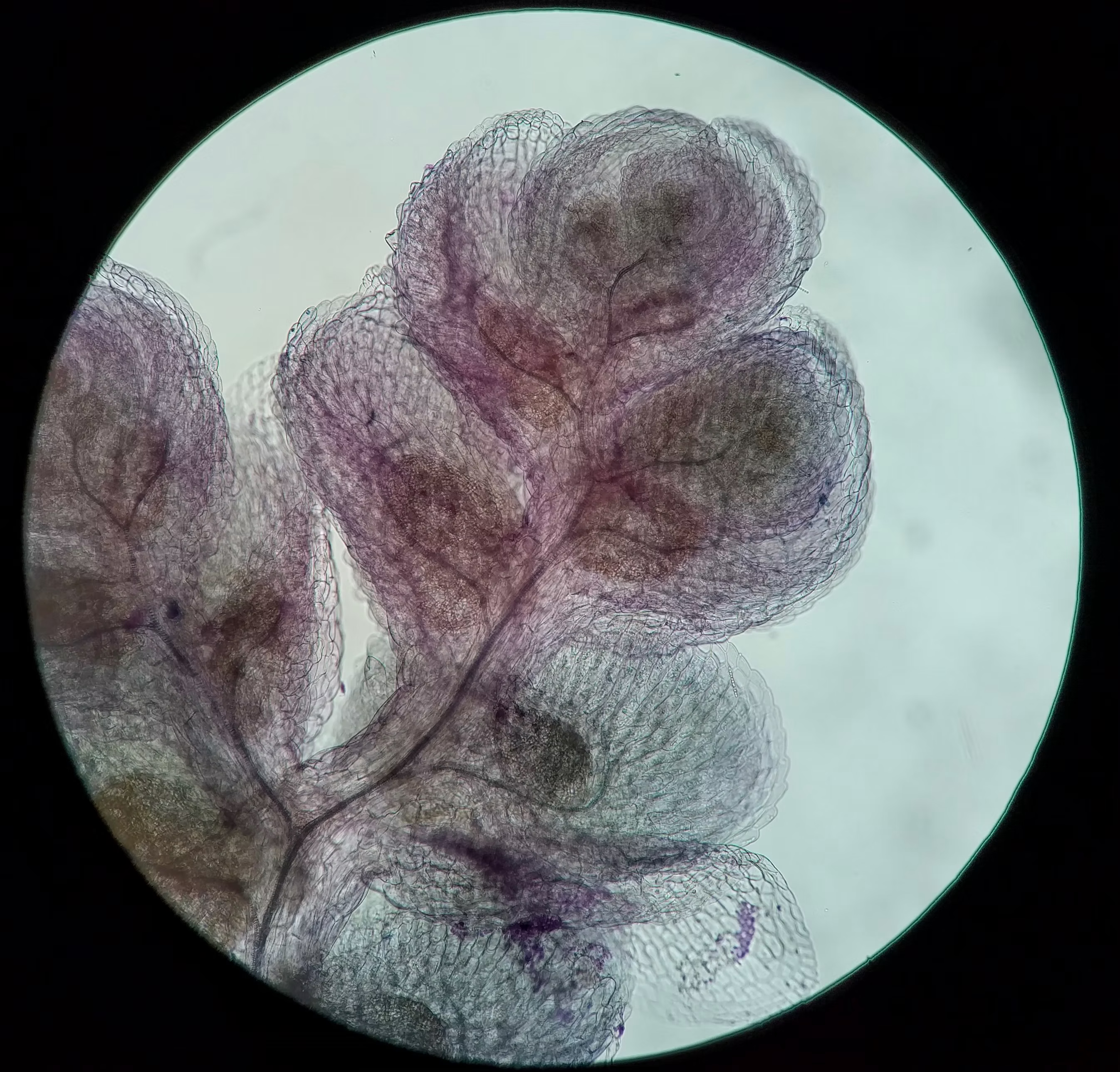
This partnership is very old. Genetic studies show that the cyanobacterium has handed off some of its basic maintenance genes to the fern, which only happens over a long shared history (Ran et al. 2010; Eily et al. 2019). People have taken advantage of it too: in Asia, farmers have used Azolla as a nitrogen-rich fertilizer in rice fields for centuries (Lumpkin and Plucknett, 1980).
Reading the fossil record
Azolla and its relatives have a rich fossil record, mostly in the form of scattered reproductive structures: the floats that carry megaspores, and clumps of microspores called massulae. The fossils show that the Salviniales are no older than the Jurassic, and that Azolla-like plants were around by the Late Cretaceous.
Reconstructing Azolla's history from reproductive structures alone is risky, though. We know of extinct plants with similar reproductive structures but very different stems and leaves (Rothwell and Stockey 1994). The best evidence comes from fossils where the reproductive and vegetative parts are found together or still attached. Most of that work has been done in the Northern Hemisphere, but sampling in the tropics and the Southern Hemisphere is catching up.
Two new species from Patagonia
In our new paper, we describe two species of Azolla from latest Cretaceous and earliest Paleocene deposits in Chubut, Argentina. The fossils were collected as part of a collaboration between Argentine and US scientists studying how the flora of Patagonia has changed since the Cretaceous.
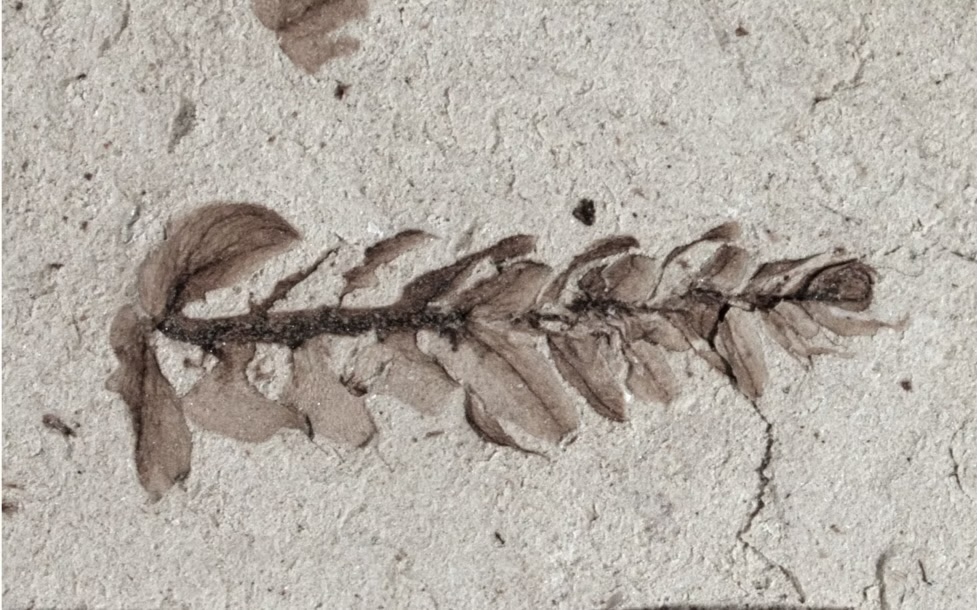
These fossils are remarkably well preserved, with stems, leaves, roots, and reproductive structures. The two species, A. coloniensis and A. keuja, are the first from the Southern Hemisphere known from such complete remains. We're still exploring what they mean, but so far we've learned three things:
- Even though they come from the same region and lived within a few million years of each other, the two species aren't closely related. That means Azolla was already diversifying by about 66 million years ago.
- A. keuja doesn't fit into any of the groups scientists have used to organize living and fossil Azolla species.
- The few living Azolla species are just a shadow of the group's extinct diversity. Any full picture of how Azolla evolved has to include the fossils.
Fossils and genomes
In evolutionary biology, living and extinct species tell complementary stories. In 2018, the complete genome of Azolla filiculoides was published (Li et al. 2018), and it's exciting to think about what it will teach us about how this group evolved, how partnerships like the one with its cyanobacterium arise, and how we might use Azolla's nitrogen-fixing partnership in agriculture. We'll probably never get DNA from extinct Azolla species, but without the fossil record we'd never see the full range of shapes and lifestyles this group has had. Keep digging.
You can see more photos in our open-access paper on the Patagonian Azolla fossils.
P.S. I'm looking for photos of living Azolla nilotica, an African species. If you have access to it, please get in touch.